
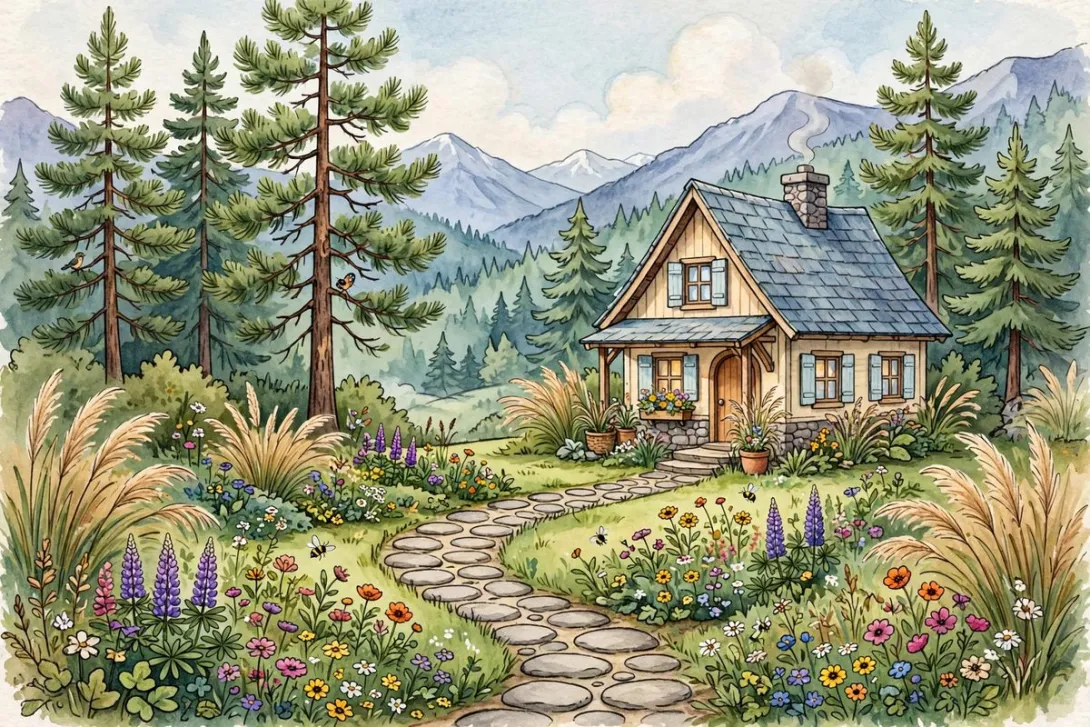
Drive through Black Bay Village and you’ll notice something: the yards feel like they belong here. Clean lines, natural tones, plantings that blend into the surrounding forest rather than fighting it. That’s no accident — it’s a shared aesthetic the community takes pride in, and native landscaping is one of the best ways to achieve it.
Native landscaping simply means choosing plants that evolved in North Idaho’s climate and soils. The payoff is real: less water, less fertilizer, fewer pest problems, and a yard that looks right at home beneath the ponderosa pines.
Why go native?
- Water wisdom: Native plants are adapted to our region’s wet springs and dry summers, so they typically need far less supplemental watering once established.
- Less upkeep: Plants suited to local soils and rainfall generally need less fertilizer and fewer chemical treatments.
- Wildlife value: Native flowers, shrubs, and grasses support the pollinators and birds that make North Idaho special.
- A natural look: Native plantings echo the surrounding forest, keeping the village’s wooded character intact.
Getting started
You don’t have to redo your whole yard at once. Start with one bed: replace thirsty ornamentals with hardy natives suited to your sun and soil, mulch well to hold moisture, and give new plantings a season to establish. Group plants with similar water needs together, and leave some breathing room — native grasses and perennials fill in beautifully over a couple of seasons.
Before you dig, check the community’s guidelines on exterior changes so your project fits the village’s shared aesthetic. A little planning up front keeps everything — your yard and the neighborhood — looking its best.
However you approach it, a yard that works with North Idaho’s landscape instead of against it is a gift to yourself and to the village. Less mowing, lower water bills, and a front yard that looks like it grew here — because it did.
- Log in to post comments