
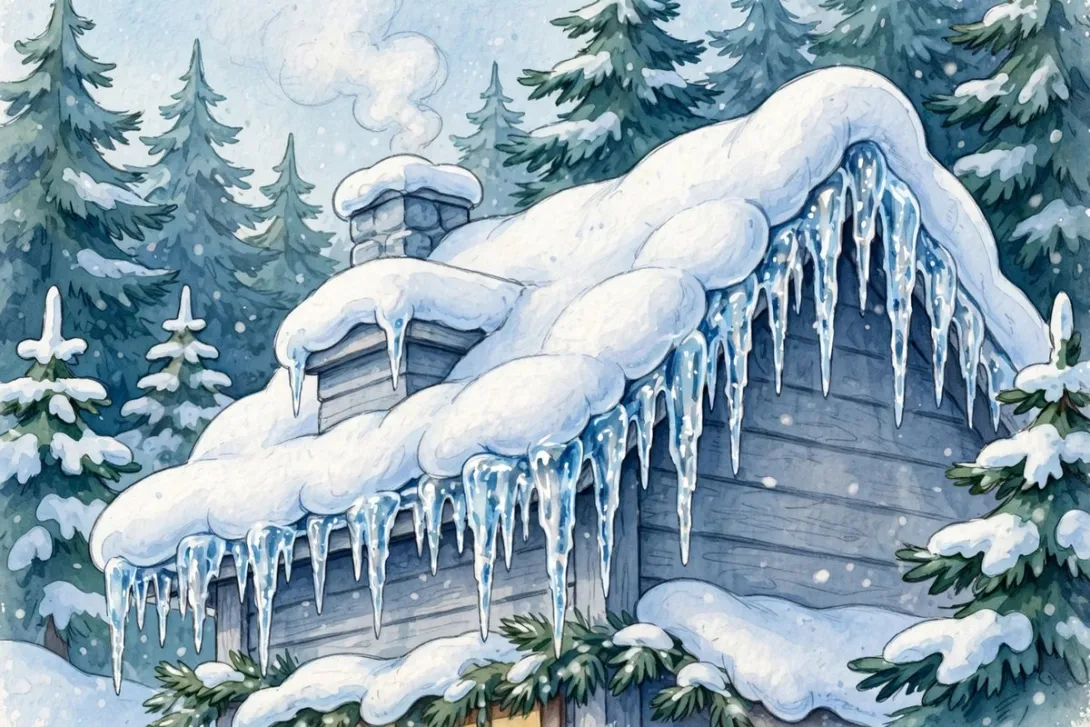
North Idaho winters bring deep snow and bitter cold — and for homeowners, one of the costliest cold-weather surprises: the ice dam. An ice dam forms when heat escaping through your attic melts the snow on your roof. The meltwater runs down toward the colder eaves, refreezes, and builds up a ridge of ice. Water trapped behind that ridge can back up under shingles, seep into the attic, and stain ceilings — or worse, damage insulation, walls, and framing.
The good news: ice dams are largely preventable, and the National Weather Service's guidance boils down to a handful of fall tasks you can tackle now, before the snow flies.
Start with your gutters. Clean gutters and downspouts thoroughly — trapped leaves and debris create clogs of their own and give meltwater nowhere to go. While you're at it, make sure downspouts direct water away from the foundation.
Next, plan to keep snow off the lower roof. After each storm, use a roof rake from the ground to pull snow off the first few feet of roof above the eaves. Removing that snow eliminates the raw material ice dams are built from. Never climb onto a snowy roof — rake from the ground, and stay clear of overhead power lines.
The deeper fix is in the attic. Heat loss is the root cause, so insulation and ventilation matter most. Northern climates generally call for attic insulation around R-38, and the attic floor should be sealed so warm air from living spaces can't leak upward. Pair that with continuous soffit-to-ridge ventilation so the roof deck stays cold and snow melts evenly.
Not sure where your home stands? A quick fall attic check — look for bare spots, thin insulation, or gaps around vents and pipes — tells you a lot. Many local contractors offer insulation assessments, and sealing air leaks is a project a motivated DIY homeowner can tackle in a weekend.
Ice dams develop silently and strike at the worst moment — midwinter, when repair work is hardest. A Saturday of gutter cleaning, a roof rake in the garage, and an honest look at your attic insulation are among the cheapest insurance a North Idaho homeowner can buy.
- Log in to post comments